Summary:
There is no single professional carpet cleaning interval that suits every commercial property. The right frequency depends on traffic, soiling, carpet construction, how the area is used and the carpet manufacturer’s maintenance requirements.
As a practical Australian industry guide, the Carpet Institute of Australia provides commercial maintenance examples ranging from low-moisture interim cleaning every nine months in lightly used executive offices to monthly cleaning in very heavily used areas. Its examples for high-moisture corrective cleaning range from every 18 months to every three months, depending on use and soiling.
These figures are guides rather than universal rules. Your cleaning programme should be adjusted according to the conditions in your facility and the requirements of the carpet.
It is also important to understand that interim cleaning and corrective cleaning are different processes. Commercial carpet maintenance can include regular vacuuming, prompt spot treatment, entrance matting, low-moisture interim cleaning and periodic corrective cleaning.
The goal is not simply to clean the carpet on a fixed annual date. It is to establish a maintenance programme that manages soil and keeps the carpet in good condition as it is used.
How Often Should Commercial Carpets Be Professionally Cleaned?
The answer depends mainly on the level of use and soiling in each area.
The Carpet Institute’s commercial maintenance guidance divides typical environments into four broad categories: light, medium, heavy and very heavy. Its example programme gives the following cleaning frequencies:
| Commercial environment | Typical use level | Low-moisture interim cleaning | High-moisture corrective cleaning |
|---|---|---|---|
| Executive office | Light | Every 9 months | Every 18 months |
| Clerical office, hospital ward or hotel bedroom | Medium | Every 6 months | Every 12 months |
| Busy corridor, foyer, shop or classroom | Heavy | Every 3 months | Every 6 months |
| Restaurant, school corridor or hospital public area | Very heavy | Monthly | Every 3 months |
These are planning examples, not mandatory schedules. Cleaning frequency should be assessed according to factors such as traffic, soiling, carpet construction and the conditions of the premises.
You should also check the carpet manufacturer’s care instructions and warranty conditions before setting a professional cleaning schedule.
What is the difference between interim and corrective carpet cleaning?
Understanding the difference prevents a common mistake: assuming that every recommended cleaning interval refers to a full deep clean.
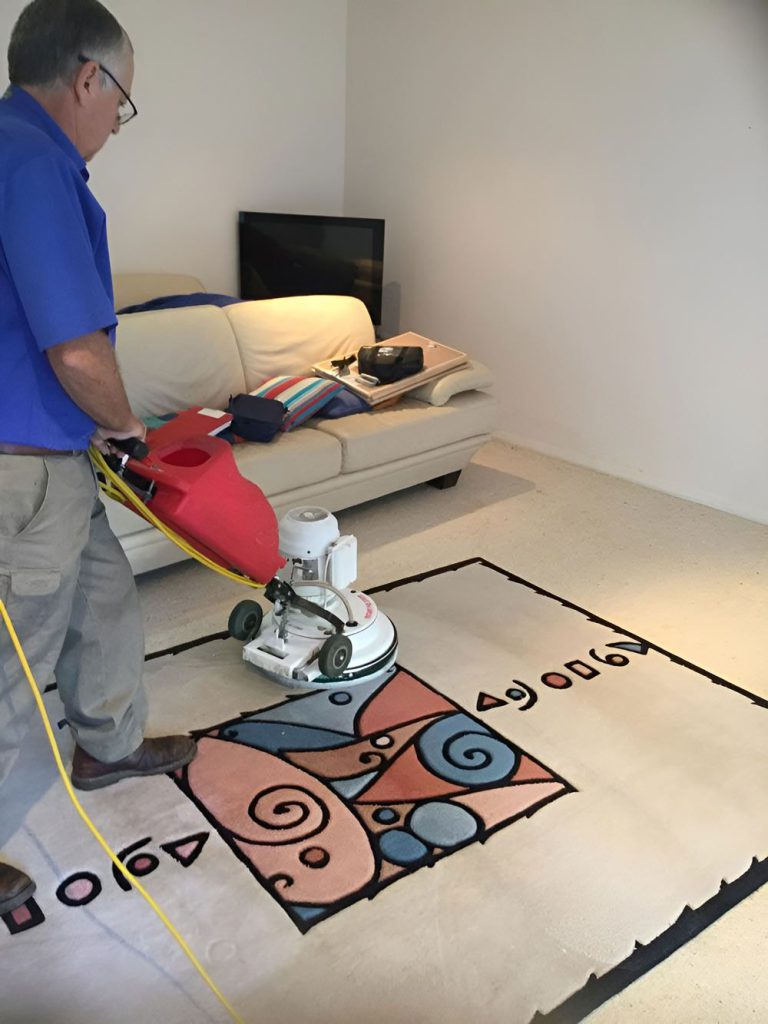
Low-moisture interim cleaning is used to manage surface soiling between deeper cleaning processes. It generally allows the carpet to dry more quickly and forms part of an ongoing maintenance programme.
High-moisture corrective cleaning is a more intensive process used when deeper soil removal is required. The Carpet Institute identifies regular deep cleaning as important for removing oily soil that accumulates in high-traffic areas.
For example, a heavy-use office may have low-moisture interim cleaning every three months and high-moisture corrective cleaning every six months. This does not mean that a full corrective clean is required every three months.
The appropriate method should always be selected according to the carpet and manufacturer’s requirements.
Why Doesn’t Every Business Need the Same Carpet Cleaning Frequency?
Commercial carpets experience very different conditions. A quiet executive office, busy retail shop and public hospital corridor should not automatically have the same maintenance schedule.
Foot traffic
Foot traffic is one of the main factors affecting commercial carpet maintenance.
People can bring soil into a building, and increased movement can concentrate soil along entrances, corridors, reception areas, foyers and other walking routes.
The Carpet Institute uses approximate person passages per week to describe different traffic levels:
- Light: fewer than 3,000 passages per week
- Medium: 3,000–6,999 passages per week
- Heavy: 7,000–14,999 passages per week
- Very heavy: more than 15,000 passages per week
A person passage means one person walking through a particular area once. These figures are useful benchmarks rather than rigid thresholds.
For example, a reception area with high visitor traffic may need considerably more maintenance than a private office elsewhere in the same building.
Level of soiling
Traffic does not tell the whole story.
Two businesses with similar foot traffic can have different levels of soiling depending on the activities taking place, the amount of soil entering the building and how effectively entrance matting is being maintained.
The actual condition of the carpet should therefore be considered when reviewing cleaning frequency.
Type of commercial premises
Different commercial spaces have different patterns of use.
An executive office does not experience the same conditions as a restaurant, retail shop, school classroom, hotel lounge or public corridor.
If a property contains several types of spaces, it may be more practical to create different maintenance schedules for different areas rather than treating the entire building as one zone.
Carpet construction
The carpet itself also affects maintenance requirements.
Commercial carpets can differ in fibre, pile, backing and overall construction. These characteristics can influence which cleaning methods and equipment are suitable.
This is why a cleaning frequency should not be selected simply because it is commonly recommended for commercial carpets in general.
Manufacturer’s maintenance requirements
Always check the manufacturer’s care instructions and warranty conditions before establishing a professional cleaning schedule.
The Carpet Institute notes that carpet warranties can be conditional on appropriate care and maintenance, with manufacturers often referring to AS/NZS 3733:2018 or equivalent care instructions. Some manufacturers may also require evidence of professional cleaning.
For facility and property managers, keeping the manufacturer’s documentation alongside cleaning records can make the maintenance programme easier to manage.
What Happens If Commercial Carpet Isn’t Cleaned Often Enough?
Professional carpet cleaning is not simply about appearance.
Soil gradually accumulates in areas where people walk most frequently. Regular maintenance helps manage this build-up, while deeper cleaning is used to remove more substantial soil, including oily soil in high-traffic areas.
If cleaning is left too long, you may notice:
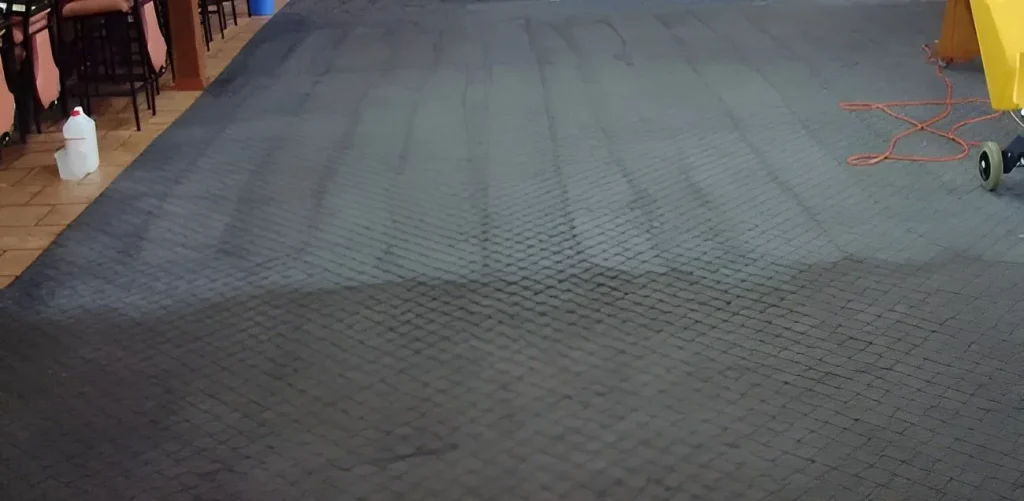
- Traffic lanes becoming darker or more noticeable
- Soil becoming increasingly visible
- More spots and stains accumulating
- High-use areas looking different from surrounding carpet
- Routine vacuuming becoming less effective at restoring appearance
- The carpet’s overall presentation declining
Leaving heavily used areas until they are visibly dirty can also mean that more intensive corrective cleaning is required.
A planned maintenance programme aims to manage soil progressively rather than waiting until the carpet is heavily soiled.
What Should Happen Between Professional Carpet Cleans?
Professional cleaning is only one part of commercial carpet maintenance. What happens between professional services can have a significant effect on how quickly soil builds up.
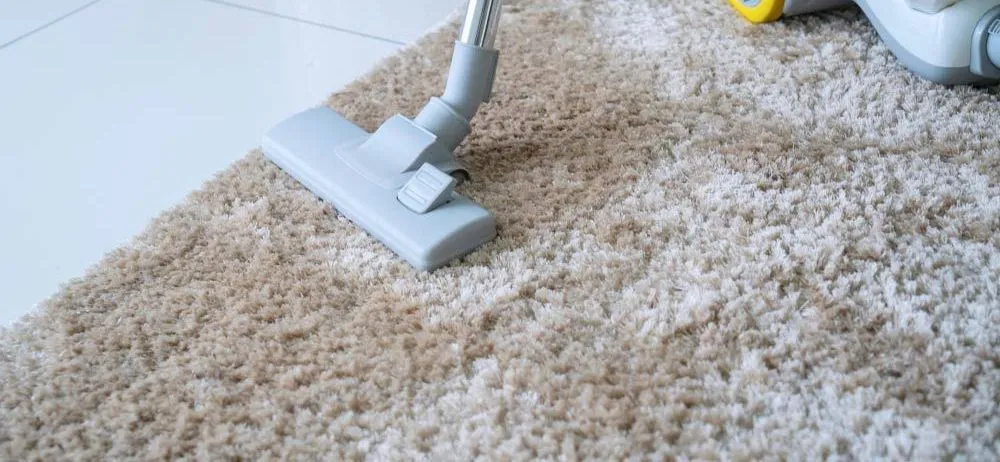
Regular vacuuming
Vacuuming is a fundamental part of commercial carpet maintenance.
The Carpet Institute states that effective vacuuming can remove around 85% of dry soil and recommends more frequent vacuuming in high-traffic areas.
Its commercial maintenance guidance includes daily vacuuming of traffic areas in heavy-use environments and daily full vacuuming in some very heavy-use areas.
Professional cleaning should therefore complement regular vacuuming rather than replace it.
Prompt spot and stain removal
Spills and spots should be dealt with as soon as possible.
Prompt treatment can help prevent spots from becoming persistent visual problems or requiring more intensive treatment later.
The Carpet Institute includes prompt spot and stain removal as part of its commercial maintenance examples.
Businesses should make sure staff know which products and procedures are suitable for the particular carpet.
Entrance matting
Preventing soil from entering the building is another important part of carpet maintenance.
The Carpet Institute recommends entrance mats to collect soiling material before it reaches carpeted areas and recommends that the matting itself is properly maintained.
A well-maintained entrance system can therefore reduce the amount of soil reaching carpeted areas.
Keep cleaning records
Facility and property managers should consider keeping records of professional carpet cleaning.
Some manufacturers may request evidence of professional cleaning as part of their warranty conditions. Recording service dates, areas cleaned and relevant documentation can also make it easier to monitor the maintenance programme.
How Do You Know Your Commercial Carpet Needs Cleaning?
A calendar is useful for planning, but the condition of the carpet should also be monitored.
Look for signs such as:
- Traffic areas becoming noticeably darker
- Soil becoming visible despite regular vacuuming
- Spots and stains accumulating
- Walking paths looking different from less-used areas
- Persistent odours
- High-use areas losing their original appearance
If the carpet regularly looks dirty well before its scheduled professional clean, the maintenance programme may need to be reviewed.
The issue may be that professional cleaning is too infrequent. However, it could also indicate that high-traffic areas need more frequent vacuuming, spots are not being treated promptly or entrance matting needs attention.
Before simply increasing the frequency of deep cleaning, identify what is causing the carpet to deteriorate more quickly.
How to Build a Commercial Carpet Cleaning Schedule
A good carpet maintenance programme should be based on the property rather than copied from another business.
1. Identify your carpeted areas
Map the carpeted areas throughout the property.
Separate private offices, meeting rooms, reception areas, corridors, foyers, stairways and other common areas. This makes it easier to identify which sections receive the most use.
2. Assess traffic
Estimate how heavily each area is used.
Consider employees, visitors, customers, deliveries and other regular movement. Where practical, use the Carpet Institute’s traffic categories as a reference point.
You do not need to count every person manually. The categories are useful for determining whether an area is lightly, moderately or heavily trafficked.
3. Assess the level of soiling
Look at the carpet’s actual condition.
Identify traffic lanes, visible soil, recurring spots and areas that become dirty more quickly than others.
This provides a stronger basis for setting cleaning frequency than applying one interval across the whole building.
4. Review carpet requirements
Find the manufacturer’s care instructions and warranty documentation.
Check the recommended cleaning methods, equipment and maintenance requirements before arranging professional cleaning.
The Carpet Institute recommends referring to manufacturer’s warranty statements and AS/NZS 3733 when formulating a maintenance programme.
5. Set routine maintenance
Establish how often each area needs vacuuming and how spots and spills will be handled.
High-traffic areas generally require more frequent vacuuming than lightly used spaces. The Carpet Institute’s commercial examples range from several vacuuming sessions per week in light-use offices to daily vacuuming in heavy-use areas.
6. Schedule interim and corrective cleaning
Once you understand the traffic and condition of each area, set appropriate cleaning intervals.
Use the Carpet Institute’s examples as a starting point, then adjust the programme according to the carpet, soiling level and manufacturer’s requirements.
Busy areas may need more frequent low-moisture interim cleaning combined with periodic corrective cleaning.
7. Review the schedule
A maintenance programme should be reviewed when conditions change.
For example, reassess the schedule if:
- Building occupancy increases
- A new tenant or business moves into the property
- A previously quiet area becomes customer-facing
- Furniture is rearranged and creates new traffic routes
- A carpeted area begins showing soil much sooner than expected
Regular review helps ensure the programme continues to match the way the property is actually being used.
The Bottom Line: How Often Should Commercial Carpets Be Professionally Cleaned?
There is no universal commercial carpet cleaning frequency.
Australian industry guidance provides a useful starting point. Depending on the level of use and soiling, low-moisture interim cleaning examples range from every nine months for light-use areas to monthly for very heavily used areas. High-moisture corrective cleaning examples range from every 18 months to every three months.
The right schedule for your business should consider:
- Foot traffic
- Level of soiling
- Type of commercial area
- Carpet construction
- Manufacturer’s care and warranty requirements
- How effectively routine maintenance is controlling soil
Most importantly, do not treat professional carpet cleaning as a once-a-year task by default. It should form part of a planned maintenance programme that also includes regular vacuuming, prompt spot treatment, entrance matting and appropriate interim and corrective cleaning.
If you are unsure how often your commercial carpets should be professionally cleaned, Dryology can help assess the condition and use of your carpeted areas and recommend a practical cleaning approach based on your facility’s requirements.