Quick Summary
- Grout is porous, so it holds soil that routine mopping doesn’t fully remove.
- Foot traffic, tracked-in dirt and cleaning product residue build up gradually, even in well-maintained properties.
- Build-up is usually most visible in traffic lanes, entry points and high-use amenity or service areas.
- Left alone, grime dulls tiles, discolours grout, and reduces the effectiveness of routine cleaning.
- Periodic specialist tile and grout cleaning is a common part of commercial tile maintenance.
You’ve probably seen this before. Your floors are cleaned on schedule, your cleaners work hard, and yet the tiles still look dull. The grout lines look stained or darker than they should.
This is one of the most common frustrations in commercial properties, and it usually has a simple cause. Tiled floors are some of the most visible surfaces in a building, so they shape how visitors and staff see your space. Build-up also happens slowly, so it’s easy to miss until it’s well established.
To fix a problem, it helps to understand where it comes from. So we’ll start with how contamination forms, then look at where it shows up and what happens when it stays put.
How Contamination Builds Up on Commercial Tile and Grout
It starts with the difference between the two surfaces. Glazed tile is generally smooth and low-porosity, so most dirt sits on top and wipes away. Grout is typically cement-based and more porous, so it holds on to whatever the tile surface sheds.
Daily use, tracked-in soil and the recessed, textured shape of grout lines all feed this process. Three things drive it.
Traffic Soil
The first is everyday dirt. Fine grit, dust and oils come in on footwear, trolleys and equipment, then settle into grout lines and textured tile surfaces.
Grit is also abrasive, so over time it can dull the finish of the tile itself.
Residue From Repeated Cleaning
The second comes from cleaning itself, and it catches even careful teams. A product used at the wrong dilution, or without enough rinsing, can leave a thin film on the floor.
That film attracts more soil, which is why a floor can look dirty soon after it’s been cleaned. Mop water that has become soiled can also push dirt into the grout lines instead of lifting it away.
Contamination Concentrated in Grout
Both of these sources end up in the same place. Grout sits lower than the tile and is porous, so soil collects there, and a standard mop can’t easily reach it.
A few habits help slow this down:
- Use clean, correctly diluted solution and change mop water regularly.
- Rinse or neutralise to reduce product residue.
- Match cleaning tools to the tile finish and grout type.
- Follow the manufacturer’s cleaning guidance for your tile and grout.
These habits reduce new build-up, but they can’t remove what’s already embedded in the grout. They also don’t change the fact that build-up isn’t even across a floor, which is where we’ll look next.
How the Problem Appears in Commercial Properties
Build-up follows the way people and equipment move through your building. Traffic concentrates along predictable paths and entry points, so soiling and wear concentrate there too. Once you know these patterns, you know where to look first.
Traffic Lanes
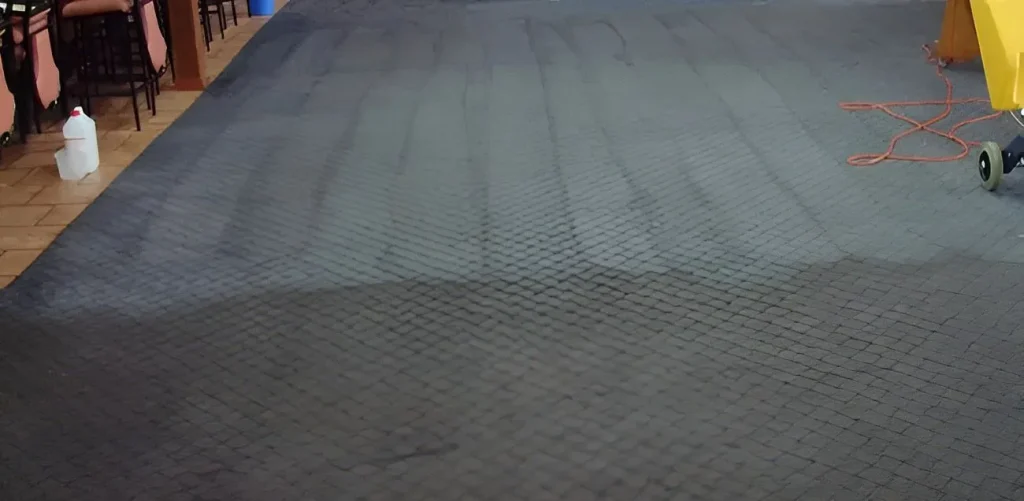
The clearest pattern shows up in corridors and main walkways, which often develop darker, duller paths. The grout in these paths may discolour first.
A simple test is to compare the walkway with the edges or corners of the same floor. If the difference is clear, soil is probably embedded in the grout.
Entry Points
Traffic lanes often begin at the door, because entrances take in the most outside soil, moisture and grit. Entry matting is a great first line of defence, but some soil still travels past the mat.
It helps to check mat coverage and condition as part of your regular maintenance. Mats that are worn or too small to cover enough floor let more grit through to the tiles beyond.
High-Use Amenities and Service Areas
Away from the main paths, some areas face different pressures. Bathrooms, kitchens, break rooms and loading or service areas commonly see more moisture, grease or heavy use. Moisture and organic matter can also contribute to staining and odour in grout.
For this reason, we recommend checking these areas more often than general floor space.
What Happens When Accumulated Grime Isn’t Effectively Removed
Once you know where build-up forms, the next question is what it does over time. It rarely causes a sudden failure. Instead, the effects add up gradually. Soil and residue keep accumulating between effective cleans, and porous grout keeps holding on to them.
Appearance Deterioration
The first effect is visual. You may notice a dulled tile finish, darker or uneven grout colour and visible traffic paths. The contrast between cleaner and dirtier areas can also make a floor look patchy, even when it’s cleaned regularly.
Increasing Maintenance Difficulty
The second effect follows from the first. As build-up grows, routine cleaning lifts less each time, so it can take extra passes or stronger products to get the same result.
Stronger products come with their own trade-offs, such as more residue or a higher risk to the tile surface. Acting early helps you avoid that cycle.
Greater Need for Periodic Specialist Cleaning
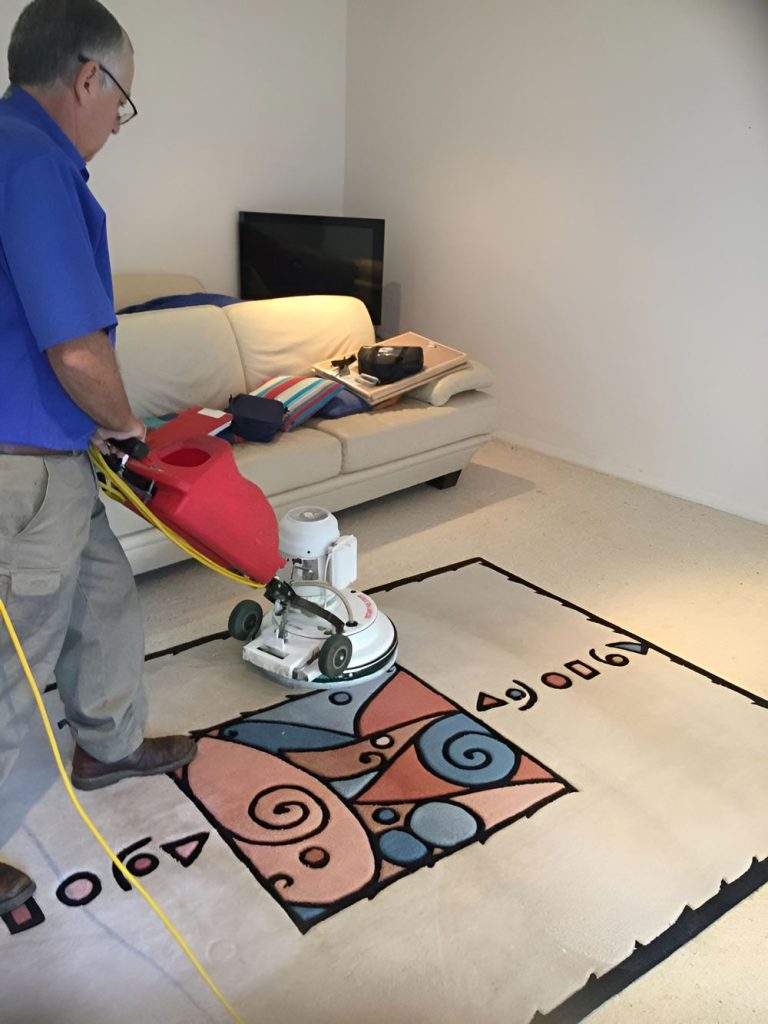
When routine methods no longer restore a floor’s appearance, deep cleaning is typically the next step. Specialist methods commonly use dedicated equipment and agitation that targets the grout lines, which is exactly the part standard mopping can’t reach.
If you manage a commercial property, these steps can help you plan:
- Document floor condition with dated photos.
- Note the areas that routine cleaning isn’t restoring.
- Schedule periodic deep cleans rather than waiting for visible deterioration.
- Ask about sealing options once the grout is clean.
Dated photos are especially handy because they show change over time. That makes it much easier to see when routine cleaning has stopped being enough.
Signs It May Be Time for Commercial Grout Cleaning
Many facility managers ask us how to tell when routine maintenance isn’t enough anymore. Because build-up is gradual, it’s easy to get used to the look of a worn floor. These signs can help you spot the turning point:
- The grout looks darker than it did at installation, or darker than grout in low-traffic areas.
- Floors look dirty soon after cleaning.
- Traffic lanes remain visible after routine cleaning.
- There’s persistent odour or staining in wet or food-service areas.
- Cleaning takes more effort for less visible results.
If you recognise two or more of these, it’s worth looking at specialist tile and grout cleaning.
Conclusion
Build-up on commercial floors comes from three sources: traffic soil, product residue and soil trapped in porous grout. It gathers in traffic lanes, entry points and high-use service areas. When it isn’t removed, appearance declines and routine cleaning becomes less effective.
That’s why periodic specialist cleaning is a standard part of commercial tile maintenance. If routine cleaning is no longer restoring your floors, Dryology can assess their condition and advise on your commercial tile and grout cleaning options.
Frequently Asked Questions
Why does my commercial tile floor still look dirty after cleaning?
Usually, soil stays in the porous grout, and product residue can leave a film that attracts more dirt. Routine mopping often doesn’t fully reach the grout lines.
How often should commercial grout be professionally cleaned?
It depends on foot traffic, the type of premises and the tile and grout used. High-traffic and food-service areas generally need it more often than low-use areas.
Is commercial grout cleaning different from regular floor cleaning?
In most cases, yes. Specialist cleaning targets grout lines and embedded soil rather than just the surface layer.
Can cleaning products cause build-up on tiles?
Yes. Over-concentrated or poorly rinsed products can leave residue that holds soil. Following the manufacturer’s dilution and rinsing guidance helps.
Does sealing grout help prevent build-up?
Sealing can reduce how readily grout absorbs soil. Whether it suits your floor depends on the grout and tile type and on correct preparation.